
How Can Interactive Displays Make Learning More Engaging for Students?
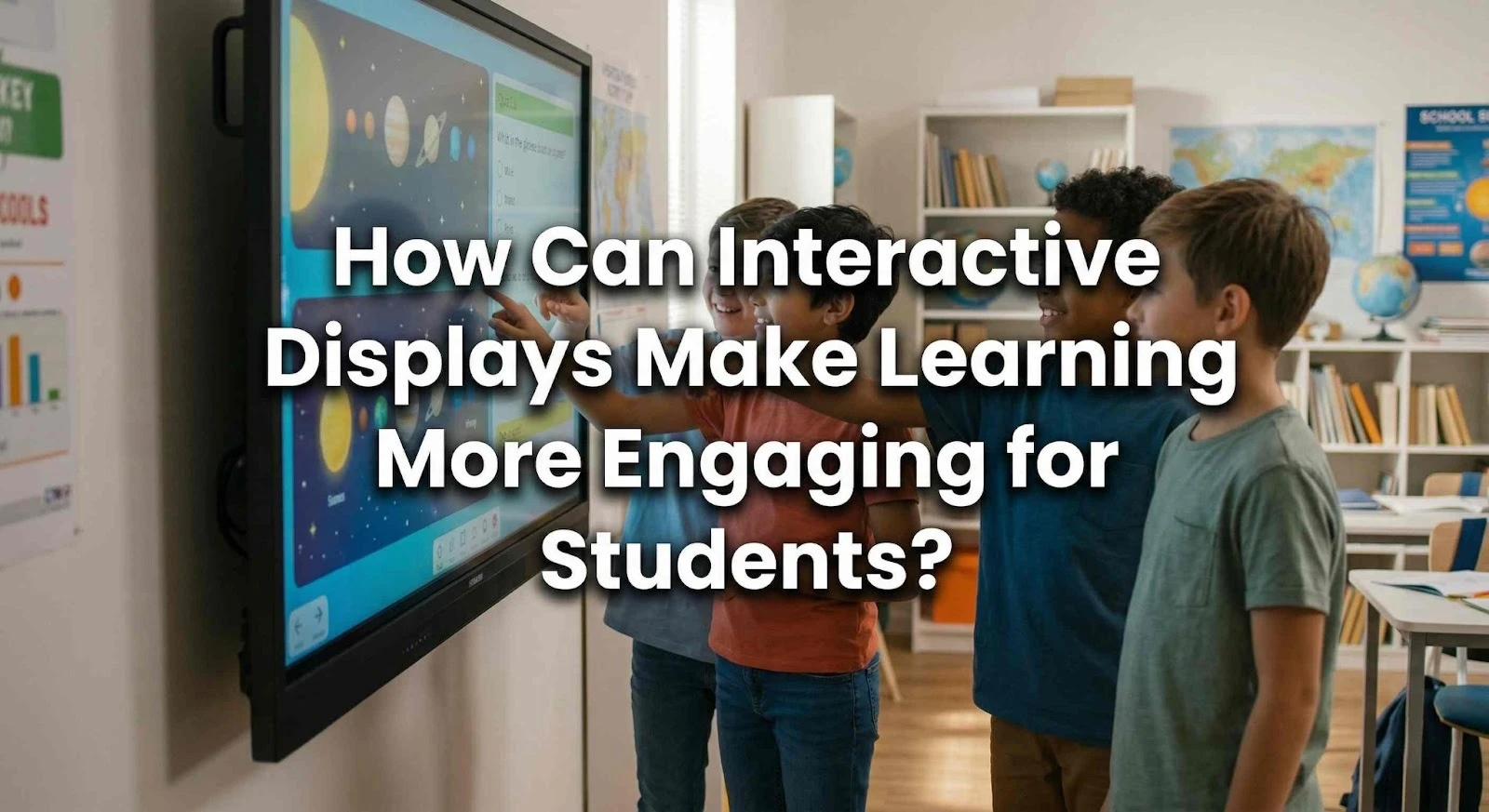
The Issue With Passive Learning
Go back to your school days. How many things do you actually recall after a lecture when you sit down and write notes? To the majority of people, the answer is: not much.
It is not an insult to teachers, it is simply the nature of the human brain. When we are active participants we remember information much better but not so when we are passive observers. That is the core of the problem that schools are attempting to address nowadays:
- Students are becoming accustomed to smartphones, tablets, and everything on demand.
- Students' expectations for how information is presented have shifted dramatically.
- Classrooms that still use chalkboards and textbooks to teach are fighting an uphill battle for attention of the students.
Interactive displays offer an alternative method, one that meets students at the point to which they already are.
What Makes Something Really Interactive?
Interactive is a word used freely, yet there is actually a difference between a screen with a slideshow and the display that allows the students to touch, explore, and discover.
True interactivity implies that a learner is able to make decisions. They will be able to:
- Tap on a topic that interests them.
- Go into detail or follow a timeline.
- Watch a highlight reel.
It's the difference between telling a story and having an opportunity to explore one yourself. That transformation, from a receiver to a participant, changes how much one will be immersed into the content.
This may manifest itself in any form in schools, whether it is:
- Interactive academic displays in the hallways..
- Athletics showcases with filterable records and photos.
- Art Gallery displays that students can swipe through.
- School history timelines that seem more like museums than bulletin boards.
Creating an Identity That Stands
Student recognition has been one area in which interactive displays have exerted a relatively strong impact. It may sound easy, but it is important to be publicly celebrated, particularly in adolescence, when the issue of belonging and identity is so pressing.
An ordinary trophy case or plaque is easy to walk past. An interactive, touchscreen-based display is something that you pause and explore.The student remembers when he or she sees his or her name and photo and achievement which appear on the digital display. The message states that your presence matters to this place and we want others to recognize your significance.
This is part of why more schools have moved toward building a digital hall of fame, a living, searchable archive of students and alumni achievements that grows richer every year. A digital display can honor hundreds of contributors across multiple decades unlike physical displays that soon run out of wall space.
The Ripple Effects on School Culture
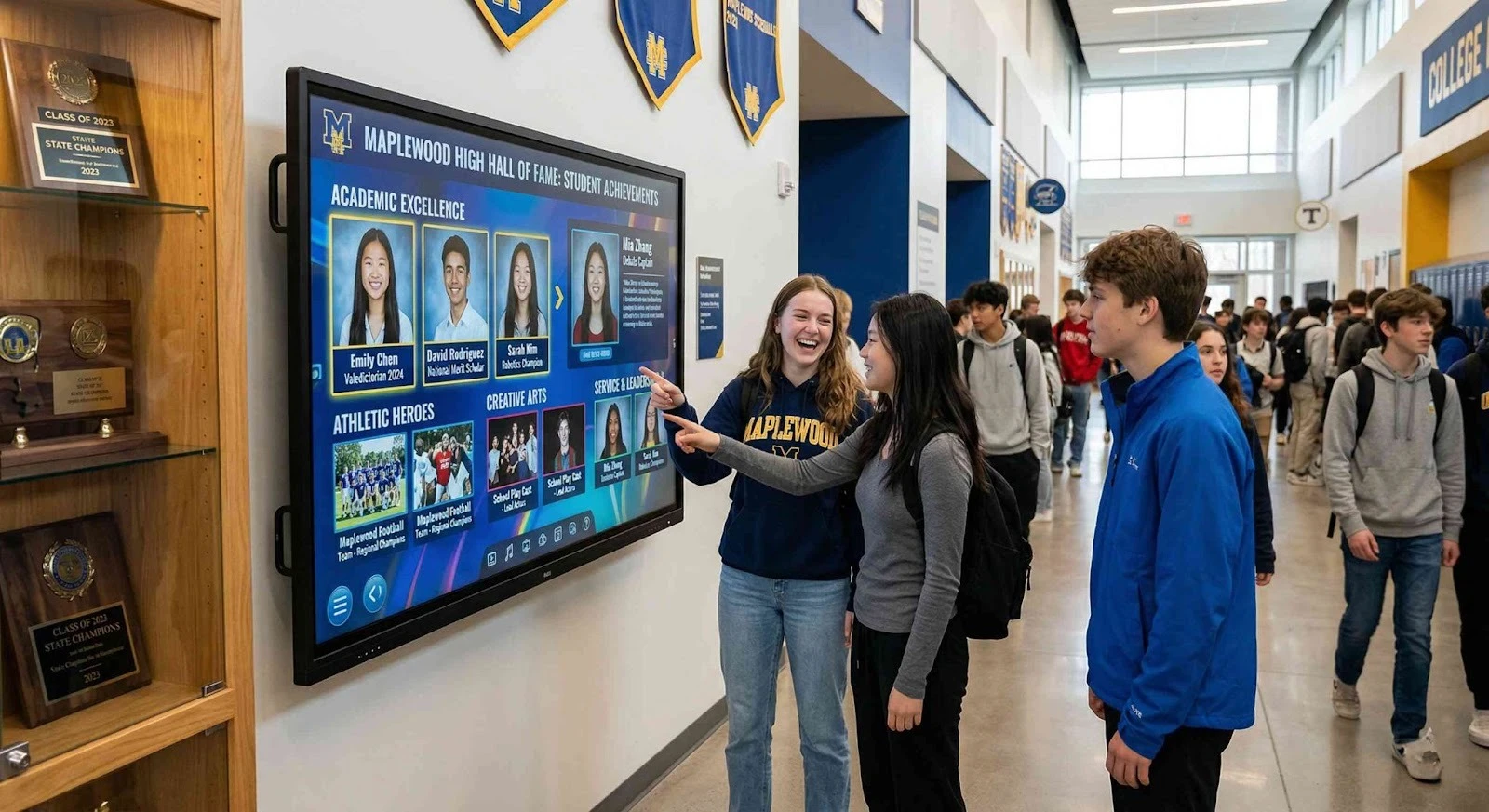
People tend to overlook this important fact: when someone receives recognition it benefits them personally while simultaneously motivating everyone who witnesses the event.
The first-year student experiences a change when they view a display which shows a former student from their hometown who has competed at national level, or a first-generation college graduate who came from the same school. An abstract goal is made concrete. A course that seemed to be impossible begins to appear as a possible.
The interactive displays create what you may call ambient inspiration. They do not need a teacher to stop and clarify, the story tells itself. Schools that have implemented a touchscreen hall of fame often report unexpected benefits:
- Increased foot traffic in lobbies and hallways.
- More meaningful conversations between current students and returning alumni.
- A stronger sense of shared identity across graduating classes.
Beyond Athletics: The Full School Story
It is a good idea to elaborate on what we mean when we talk about interactive displays in schools. Athletics tend to receive all the attention, yet the same technology can be used in academics,arts and the school culture in general.
Academic and Artistic Applications
- Science Wings: Exhibitions of alumni who entered the fields of medicine, engineering, or research.
- Arts Corridor:The arts corridor provides students with three activities which include watching past theater productions, or browsing previous student artwork, or reading the biographies of music instructors who shaped music programs.
They are not mere decorations, these are context. They help students realize the institution they belong to and be proud of it. The displays at the school provide prospective families with information which exceeds what a brochure can deliver: this is a school that has a history, and it does not lose it easily.
Practical, Scalable, and Built to Last
Sustainability is one of the concerns that are raised by schools. Will this technology lose its relevance? What would be the case when the content has to be updated?
The most suitable modern platforms are cloud-based and built for non-technical users. A simple management system is enough to update the contents without the need to have an IT department.
- New achievements can be added when it occurs.
- Old records stay intact.
- The display evolves with the school as opposed to being frozen at a single moment in time.
That longevity is important. The history of a school is never closed, it is continuously being written.
Bringing It All Together
Interactive displays are effective as they tap into one of the core human values: people connect better when they feel included. To students, a history of their school displayed on screen and knowing that at some point in their lives they too will be included in it makes them feel a sense of pride and investment that cannot be achieved through passive learning.
It could be sporting success, academic success, or decades of alumni success, whatever the case the technology exists to do it in a way that's dynamic, accessible, and genuinely inspiring. It is not really a question to schools on whether to invest in more engaging environments, it is where to begin.
Зарегистрируйтесь или войдите, чтобы иметь возможность оставить комментарий.